
Founding families get a free diagnostic assessment. Join the waitlist →

Coming soon to OttawaFrançais

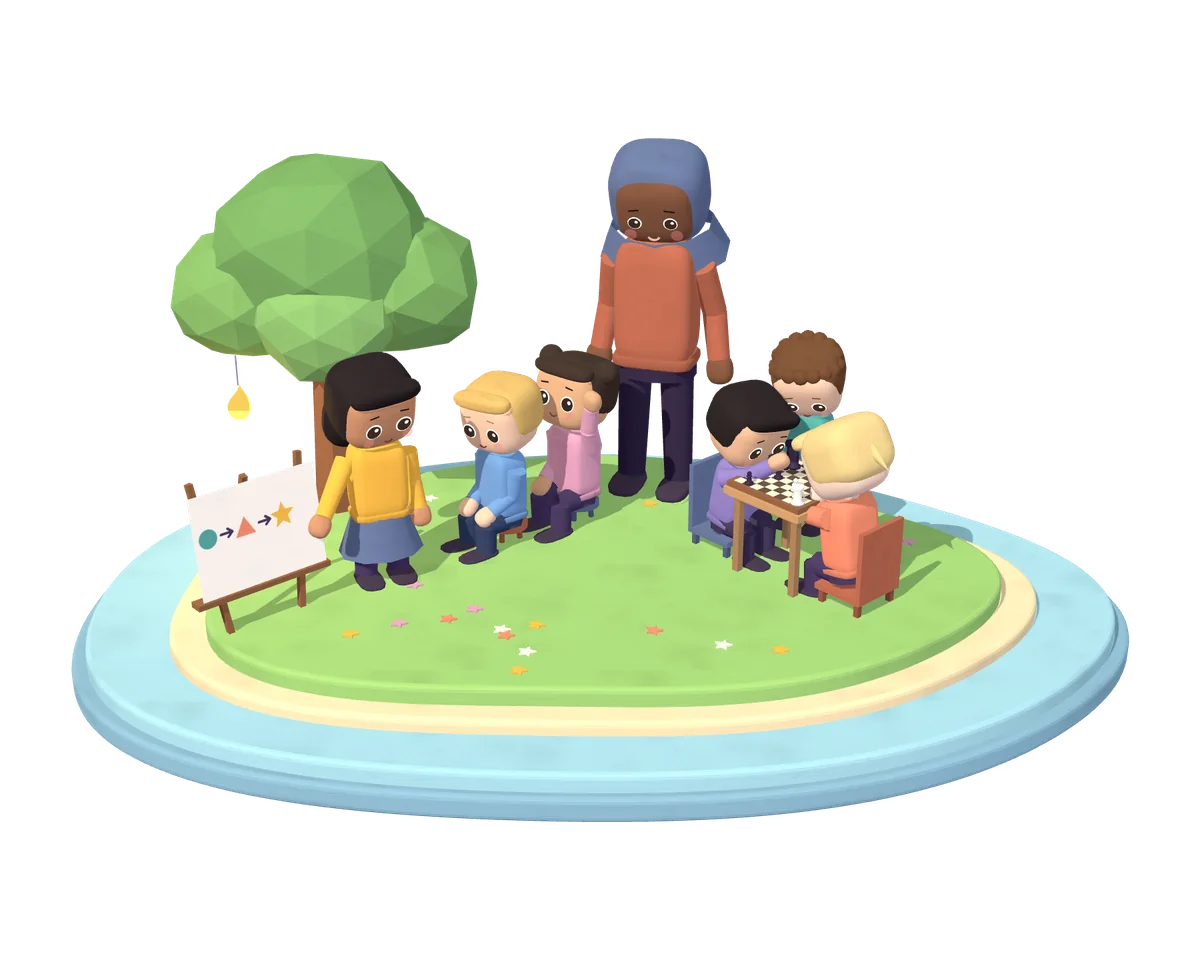
On a paper island, two children play chess while a friend watches, a girl presents a drawn idea at an easel to two seated classmates, one with a hand raised, and a mentor looks on.

Thinking and leadership · Grades 1 to 12

Learn to think well and lead, in a world with AI.

Your child will grow up with a machine that can answer almost anything. Here they learn to ask better questions, make a case and see an idea through.

At a glance

Thinking and leadership

Grades
Grades 1 to 12
Who it’s for
Any learner, Grades 1 to 12, on its own or alongside another program
Focus
Logic, debate, ethics, entrepreneurship and AI literacy
Languages
English and French

Starts with: A diagnostic assessment, free for founding families, and a written learning plan

Tutoring+ This is the + in Hikmah Tutoring+: alongside tutoring in math, reading and writing, or on its own.

Hikmah Tutoring+EnrichmentUniversity and college admissions

A year at Hikmah

Liam rarely spoke up in class. By June, he was pitching to a panel.

Liam, Grade 6
Children play chess and present an idea at an easel while a mentor looks on.

Illustrative example.

  1. September

    Quiet, with a lot to say

    Liam rarely spoke in class but had sharp opinions at home. His parents wanted him to voice them, and to back them up.

  2. The diagnostic

    Strong reasoning, no room to use it

    He spotted flaws in arguments quickly but froze when making his own case. His plan started small: short arguments to his mentor.

  3. Midwinter

    A debate, and an AI that was wrong

    Preparing a debate on phones in class, he checked an AI tool’s arguments. Two had no source, and he said so in his rebuttal.

  4. June

    A pitch to a real panel

    Liam and two partners pitched a board game library to parents and local business owners. He answered the hardest question himself.

The project, up close

Project board

A business idea, from sketch to pitch

Liam, Grade 6, and two partners

Audience: A panel of parents and local business owners

Milestone 2 of 3

Discover2

  • Find a real problem at schoolDone
  • Talk to the people who have itDone

Build3

  • Sketch the lending libraryDone
  • A simple budgetIn progress
  • Draft the pitchIn progress

Pitch2

Their reflection
“Some classmates said they’d never borrow a game. That changed our plan.”

Capacities it builds

  • Create
  • Decide
  • Lead

Illustrative example.

What they learn

Four strands, from Grade 1 to Grade 12.

The foundations

  • Logic and ethics

    Reasoning clearly, and reasoning well about what is right.

    • Hidden assumptions
    • Common fallacies
    • Sound arguments
    • Hard ethical questions
  • Rhetoric and debate

    Making a case others can follow, and answering the case against it.

    • Claim, reason, evidence
    • A clear structure
    • Rebuttal
    • Stating the other side fairly
  • Entrepreneurship

    Turning an idea into something real.

    • Finding a real problem
    • Talking to customers
    • Simple budgets
    • Pitching an idea
  • AI literacy

    AI as a tool, not a crutch.

    • How AI works, plainly
    • Asking good questions
    • Checking AI against sources
    • Knowing when not to use it

Six capacities AI can’t replace, at this age.

What each one can look like in this program.

  • Think critically

    Finding the hidden assumption in an argument, including their own.

  • Create

    Turning a problem they noticed into a business idea.

  • Solve problems

    Checking an AI tool’s answers against real sources.

  • Decide

    Weighing an ethical question, and changing their mind for a good reason.

  • Communicate

    Delivering a rebuttal in a formal debate.

  • Lead

    Leading a team pitch, and giving credit to the others.

Illustrative example.

At every age

Lively rounds, real cases, on Ontario’s transferable skills.

What thinking and leadership looks like week to week. Choose a question.

Quick rounds that keep everyone thinking.

A warm-up question, a logic puzzle, a timed debate round, then a case or venture.

  • Short rounds where everyone has a turn
  • Puzzles and cases, not lectures
  • A season-long venture for staying power

Illustrative screen. The Hikmah platform is in development.

Inside the program

Six moments that make up the program.

Step through what your child will meet, from the first diagnostic to the progress update you receive each month.

The method, step by step

01 · Before the first session

The diagnostic

How your child reasons, argues and speaks to a group, so the plan starts there.

An example week

  1. MondayLogic

    A puzzle or an argument to take apart.

  2. TuesdayRhetoric

    A short speech on one claim, with feedback.

  3. WednesdayVenture lab

    Customer questions, a budget or the next pitch draft.

  4. ThursdayAI lab

    An AI tool on a real task, checked against sources.

  5. FridayDebate and ethics

    A hard question, and what changed their mind.

Illustrative example. Schedules will be shared with founding families before we open.

What parents see

Every month, a clear picture.

Once a month, your child’s mentor sends you a progress update in plain words: the skills mastered, what comes next and one thing to try at home.

How to start

  1. Join our founding families
  2. A free diagnostic assessment when we open
  3. A written learning plan, then the first session
Join the founding families

Wondering who your child’s mentor will be? How we choose, check and train mentors

Liam

Grade 6 · January

From Liam’s mentor

January

This month Liam gave his first rebuttal in a formal debate. He used an AI tool to gather the arguments against his side, checked each one and flagged two with no source. He still speeds up when he’s nervous, and he knows it.

Next

Pacing and pauses, and his team’s first customer conversations.

Illustrative screen. The Hikmah platform is in development.

Questions from parents

What parents ask about thinking and leadership.

Does my child need to be outgoing?

Not at all. Quiet children often have the most to say. We build up from speaking to a mentor to speaking to a room, at your child’s pace.

How does it work across such a wide age range?

The strands stay the same from Grade 1 to Grade 12; the depth changes. How groups will be organized by age will be shared before we open.

Can it be taken alongside another program?

Yes. It works on its own or alongside Elementary, Middle years or High school, and your child’s mentor makes sure the two plans support each other.

Isn’t this just public speaking?

Speaking is part of it. Underneath is reasoning: telling a good argument from a bad one, weighing a hard question and seeing an idea through.

Come and see how your child thinks.

Join our founding families. When we open, a free diagnostic assessment shows you what we see in your child.