
Founding families get a free diagnostic assessment. Join the waitlist →

Coming soon to OttawaFrançais

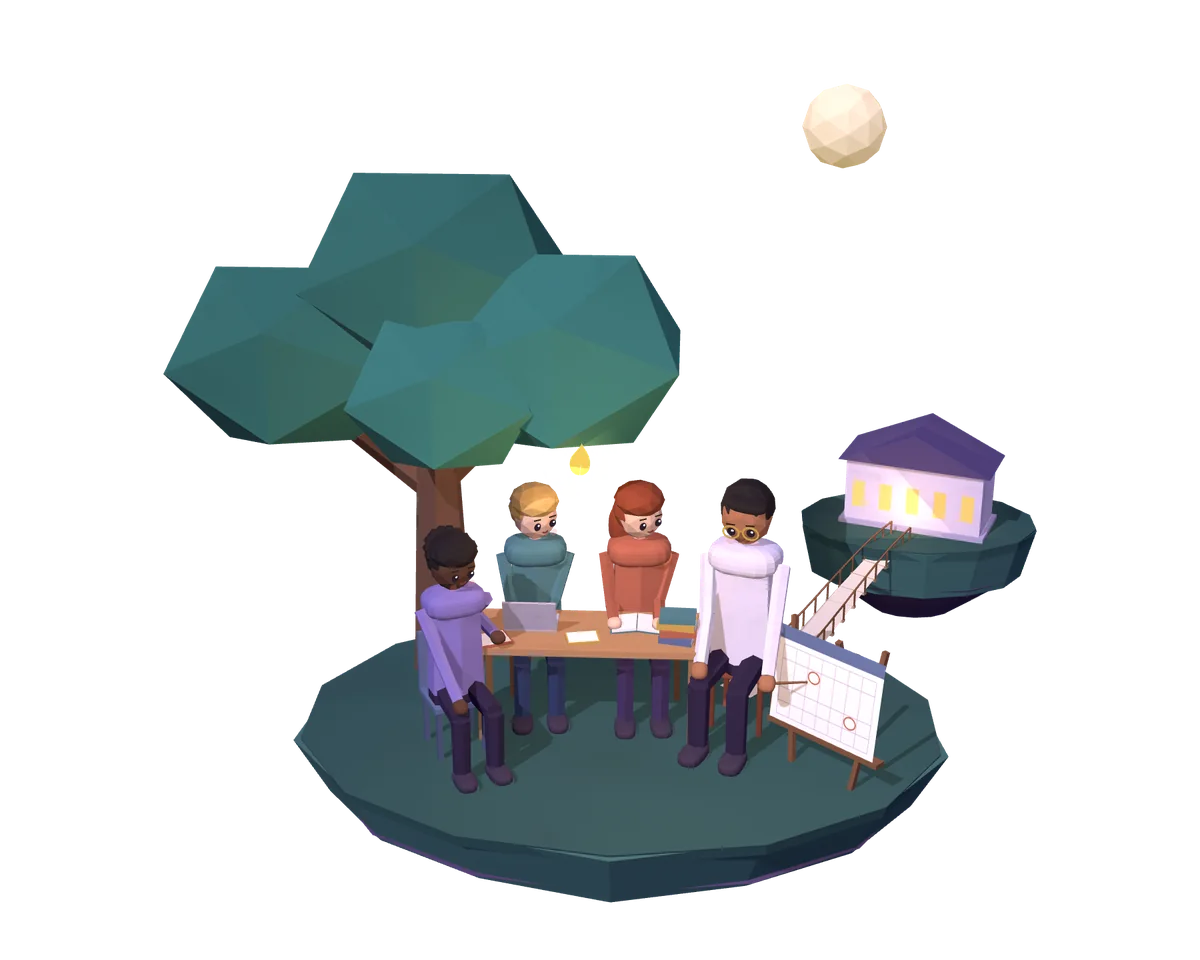
On a folded-paper island at dusk, three teenagers study calmly at a long table under a lantern tree while their mentor points to a calendar plan with two dates circled, and a paper path leads off to a distant lit building.

High school · Grades 9 to 12

Rigorous and calm, with a plan for what comes next.

Your teen’s marks start to count and their choices start to narrow. Here they master the hard courses, write with precision and build a portfolio of real work.

At a glance

High school

Grades
Grades 9 to 12
Who it’s for
Teens aiming high, from Grade 9 foundations to applications
Focus
Math and sciences, academic writing, test strategy and a portfolio
Languages
English and French

Starts with: A diagnostic assessment, free for founding families, and a written learning plan

Tutoring+ If your teen is struggling in a course, the program starts as tutoring: the trouble is traced to its root, and the plan works around their tests.

High school tutoringTest prepUniversity and college admissionsStudy skills

A year at Hikmah

Grace was working harder and getting nowhere. By June, the night before an exam was calm.

Grace, Grade 11
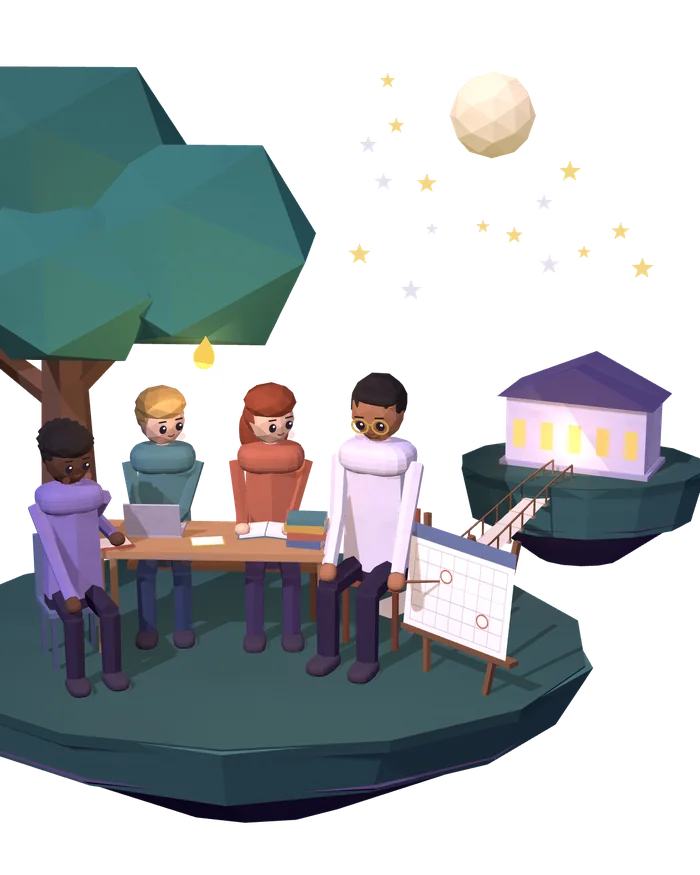
Three teenagers study at a long table under a lantern tree while their mentor points to a calendar plan.

Illustrative example.

  1. September

    Working harder, getting nowhere

    Grace wants to study health sciences. She did every practice problem, yet Grade 11 functions and chemistry weren’t sinking in.

  2. The diagnostic

    The root was in Grade 9

    Nearly every calculation leaned on rearranging equations and working with units, and she had been memorizing her way around both.

  3. Midwinter

    A lab report someone read

    She designed an experiment on temperature and reaction rate, presented it to families and guests, and rewrote her discussion twice.

  4. June

    Calm the night before

    Before her functions exam, Grace reviewed her plan and went to bed. In June she mapped out Grade 12 with her parents and mentor.

The project, up close

Project board

A science experiment presented to an audience

Grace, Grade 11, with her mentor

Audience: Families and guests at the centre

Milestone 2 of 3

Design3

  • Write a testable questionDone
  • Design a fair testDone
  • Run trials and record dataDone

Analyze2

  • Analyze data and errorIn progress
  • Write the discussionIn progress

Present2

Their reflection
“Every claim in my discussion now points to a line in my data.”

Capacities it builds

  • Think critically
  • Create
  • Communicate

Illustrative example.

What they learn

Mastery in the courses that open doors.

The foundations

  • Math

    Grade 9 foundations to calculus readiness, every gap traced to its root.

    • Rearranging with units
    • Functions and graphs
    • Trigonometry
    • Advanced functions
  • Sciences

    Biology, chemistry and physics as ways of reasoning.

    • Designing a fair experiment
    • Lab reports
    • Calculations and units
    • Data and error
  • Academic writing

    A clear thesis, real evidence and a conclusion that follows.

    • A thesis worth defending
    • Essays and research papers
    • Citing sources
    • Editing their own drafts
  • Tests and planning

    Exam strategy, course choices and applications.

    • Exam planning
    • Test strategy and pacing
    • Course selection
    • Application essays

Six capacities AI can’t replace, at this age.

What each one can look like in this program.

  • Think critically

    Asking whether a conclusion really follows from the data.

  • Create

    Designing an experiment from scratch.

  • Solve problems

    Working backwards from a missed exam question to the skill underneath.

  • Decide

    Choosing Grade 12 courses with life after high school in view.

  • Communicate

    Defending a research paper’s thesis in front of a panel.

  • Lead

    Testing a business plan with customers, then revising it.

Illustrative example.

At this age

Deep work, clear plans, on the Ontario courses ahead.

What the Hikmah model looks like in high school. Choose a question.

Deep work in focused blocks, planned around school.

Each week starts from school tests and deadlines, then moves through focused blocks with one clear goal.

  • Phones away, one clear goal per block
  • Practice on what the next test needs
  • Long papers broken into milestones

Illustrative screen. The Hikmah platform is in development.

Inside the program

Six moments that make up the program.

Step through what your child will meet, from the first diagnostic to the progress update you receive each month.

The method, step by step

01 · Before the first session

The diagnostic

The courses ahead, and the earlier skills they lean on. The plan starts at the weak one.

An example week

  1. MondayMath

    Missed questions traced back, then targeted practice.

  2. TuesdayScience

    What the data shows, and what it doesn’t.

  3. WednesdayWriting

    One section of a report, edited line by line.

  4. ThursdayCheck and plan

    A mastery check, and the week planned around school tests.

  5. FridayPortfolio

    Project time and a short written reflection.

Illustrative example. Schedules will be shared with founding families before we open.

What parents see

Every month, a clear picture.

Once a month, your child’s mentor sends you a progress update in plain words: the skills mastered, what comes next and one thing to try at home.

How to start

  1. Join our founding families
  2. A free diagnostic assessment when we open
  3. A written learning plan, then the first session
Join the founding families

Wondering who your child’s mentor will be? How we choose, check and train mentors

Grace

Grade 11 · March

From Grace’s mentor

March

This month Grace mastered rearranging formulas with units, the skill under most of her functions and chemistry errors. Her lab discussion now ties every claim to a line in her data. She presents it to families later this month.

Next

Transformations of functions, and an outline for her research paper.

Illustrative screen. The Hikmah platform is in development.

Questions from parents

What parents of teens ask us.

Is it too late to start in Grade 11 or 12?

No. Many teens start with tutoring in one course: the diagnostic shows which foundations it rests on, and often the hardest part comes down to one earlier skill that can be fixed directly.

Do you help with applications and tests?

Yes, as part of the plan: course choices, application essays, a portfolio of real work and test strategy when needed. Details will be shared with founding families before we open.

How is AI used?

Openly, as a tool, for checking reasoning or arguing the other side. The work in their portfolio is their own, and they can explain every line of it.

My teen is already busy. How does this fit?

The plan is built around their school workload, exams and activities, and adjusted when a heavy week comes.

Let’s make a plan together.

Join our founding families. When we open, your teen’s free diagnostic assessment gives you both a clear picture of where they stand.