
Project-based learning
Knowledge becomes real when it’s used.
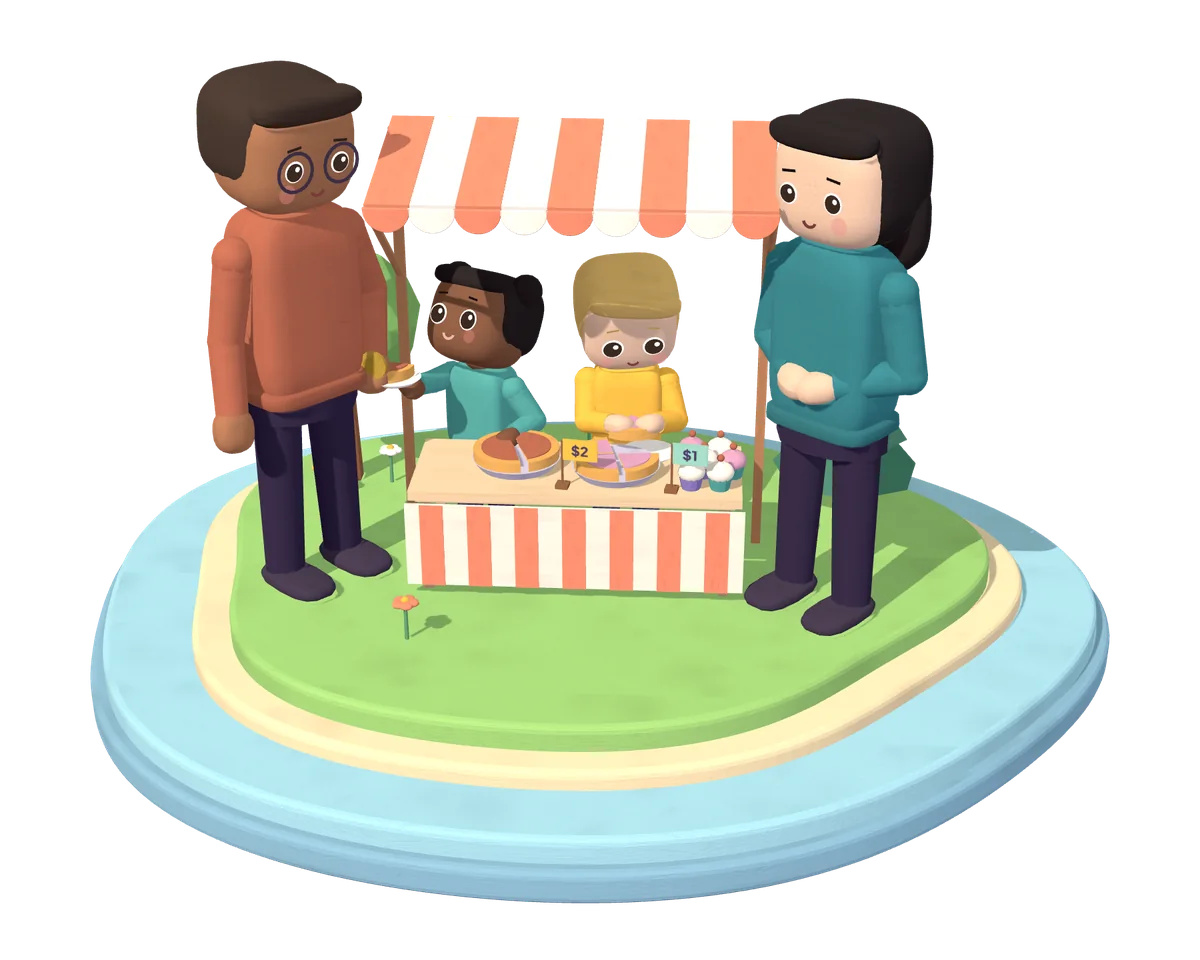
Your child sees what a skill is for when they use it, like fractions that price a bake sale. So every unit at Hikmah ends in something real.
At a glance
Three things your child takes from every project.
Practice still comes first, skill by skill. The project is where those skills meet.
Skills put to work
This month’s fractions price a real menu, so your child sees what they’re for and practises them where they matter.
Work they can show
Every project goes in a portfolio: what they made and what they learned, in their own words.
A project they can run
The same five stages from Grade 2 to Grade 11, until your child can plan and finish one on their own.
Inside one project
One project, start to finish.
Follow a Grade 6 team through a bake sale that has to break even. Choose a stage to see what your child does, practises and makes.
Project board
The question
What should we bake, and what should it cost, so our table covers its costs?
- For
- Market-day customers and a panel of parents
- Success
- Costs covered, and a three-minute talk on our price
- Roles
- Maya, the survey · Dev, the costs · Chloé, the menu card
- Due
- In four weeks
Favourite bake · 24 families
From the grocery flyer
Where the numbers came from
- Survey
- 24 families, asked at pickup
- Prices
- This week’s grocery flyer
Recipe × 3
Break-even
Costs covered at 19 sold
Mastery check passed: multiplying fractions
Market day
Sold 34 of 36
Costs covered
From the panel
“Why $1.50 and not $1?”
“At $1 we’d need 28 sales just to cover our costs.”
Maya’s reflection
- What worked
- The survey picked the right muffin.
- What I’d change
- Cost everything before we pick a price.
- Next
- Percentages, for the spring market.
Saved to Maya’s portfolio
Stage 1 of 5
A real question, and who it’s for
The team turns “a bake sale” into a question worth answering, with a real audience and a deadline.
- Your child practises
- Finding the real question
- Sharing out the work
- The mentor’s role
- Helps the team sharpen the question, and makes sure every member has a job.
Stage 2 of 5
What they need to know
They survey families to choose what to bake, and price every ingredient from a grocery flyer.
- Your child practises
- Checking where each number came from
- Turning a survey into a chart
- The mentor’s role
- Asks where each number came from, and whether 24 families is enough to go on.
Stage 3 of 5
A plan, with the math done
They scale the recipe, cost every muffin and choose a price, then find where they break even.
- Your child practises
- Multiplying fractions to scale a recipe
- Designing the menu card
- The mentor’s role
- Starts with a short mastery check on multiplying fractions, then lets the team price it themselves.
Stage 4 of 5
Shown to a real audience
On market day they sell, then explain their price to a panel and answer its questions.
- Your child practises
- Explaining a decision to adults
- Standing by the price under questions
- The mentor’s role
- Invites the panel and coaches the talk, then steps back and lets the team answer.
Stage 5 of 5
What worked, and what’s next
With their mentor, each child writes what worked, what they’d change and what to learn next.
- Your child practises
- Judging their own work honestly
- Owning what to change
- The mentor’s role
- Writes the portfolio note with your child and adds the next skill to their learning plan.
Illustrative example.
What a project could look like, at every age
Choose an age. The shape stays the same; the ambition grows.
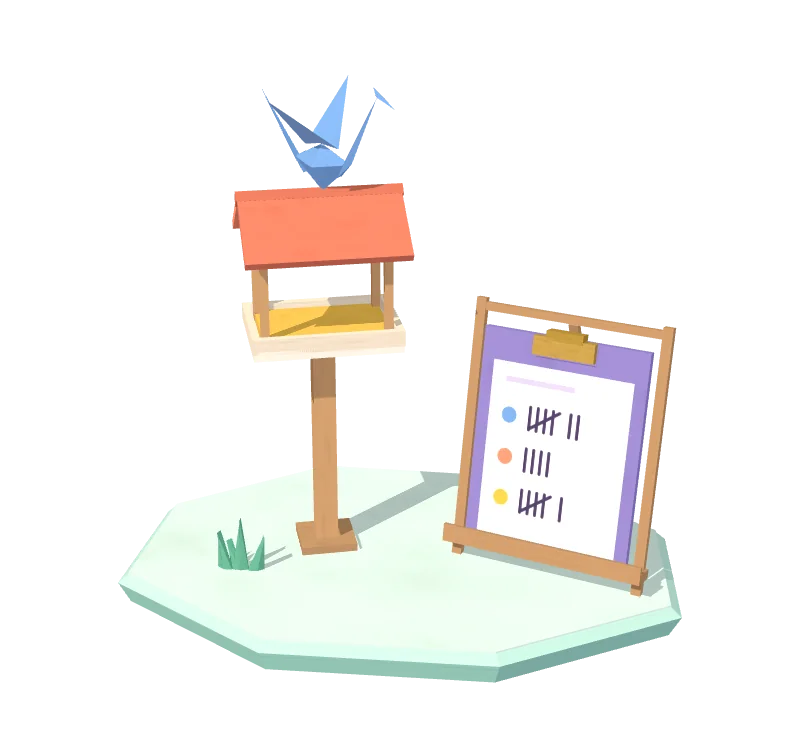
Elementary · Grades 1 to 3
A class guide to the birds outside our window
They watch and sketch the birds, then each writes one clear page.
- Audience
- Families, at a morning reading
- Skills it puts to work
- Observing closely
- Writing clear sentences
- Reading aloud with confidence
- Brief
- Research
- Build
- Present
- Reflect

Elementary · Grades 4 to 6
A bake sale that has to break even
They price a menu, scale recipes and track every cost.
- Audience
- Customers on market day
- Skills it puts to work
- Fractions and money
- Planning a budget
- Explaining a decision
- Brief
- Research
- Build
- Present
- Reflect
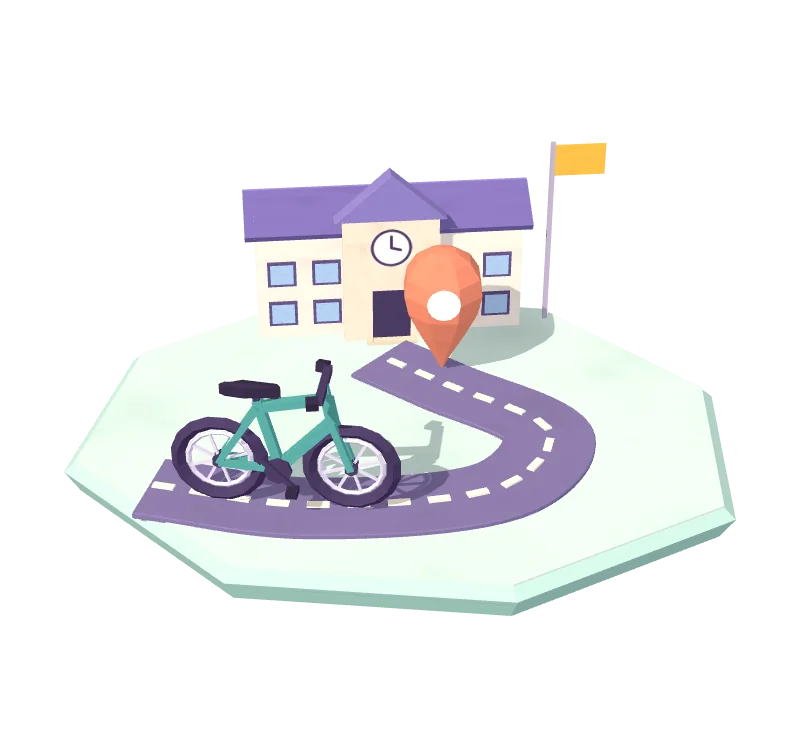
Middle years · Grades 7 and 8
A proposal for safer bike routes to school
They survey families, map the routes and argue for one change.
- Audience
- A guest panel of local adults
- Skills it puts to work
- Data and graphs
- Persuasive writing
- Presenting and answering questions
- Brief
- Research
- Build
- Present
- Reflect

High school · Grades 9 to 12
A research paper and talk on a local question
They check sources, analyze the data and defend a conclusion.
- Audience
- An invited panel
- Skills it puts to work
- Research and sources
- Statistics
- Defending an argument
- Brief
- Research
- Build
- Present
- Reflect
Illustrative example. Real projects are shaped by each child’s learning plan.
For your family
You’ll see the work, not just the mark.
Every project ends in a portfolio entry you can read in two minutes: what your child made, the skills it used and what comes next.
Hikmah Tutoring+
- Catching up now
- The project uses what your child is practising in Tutoring+: the fractions in this month’s learning plan are the ones that price the menu.
- Ready for later
- Planning, presenting and answering hard questions: the work that stays human as AI takes on more.
Portfolio
NovemberMarket day: a bake sale that has to break even
What she made
A costed menu, a break-even chart and a three-minute talk to a panel of parents.
Skills she used
- Multiplying fractionsMastered
- Unit ratesMastered
- Explaining a decisionGrowing
In her words
“We guessed the table fee at first. Next time I’d cost everything before we pick a price.”
From her mentor
Maya answered the panel’s hardest question with her own chart. Next: percentages, for the spring market.
The difference
Worksheets ask what they remember. Projects ask what they can do.
Worksheets, homework help and test practice all have their place. Here’s what changes when a unit ends in something real.
How a unit ends
The usual wayA test on Friday
At HikmahSomething made and shown to a real audience
When your child is stuck
The usual waySomeone shows them the answer
At HikmahTheir mentor asks the question that gets them moving
Who sees the work
The usual wayThe teacher
At HikmahFamily, classmates or a guest panel
What gets practised
The usual wayRecall, for a day
At HikmahSkills put to work, plus planning and persistence
What’s kept
The usual wayA mark in a gradebook
At HikmahA portfolio piece, with notes and your child’s reflection
The research
What the research says. And what we’ll measure.
Hikmah hasn’t opened, so we have no results of our own yet. Here is the published research our projects build on, and what we’ll track from the first day.
Meta-analysis · 30 studies · nine countries
Projects, compared with traditional teaching
Students in project-based classes did better on achievement measures than students taught traditionally, with a medium to large average effect in this review (0.71); other reviews have found smaller effects. Effects varied with the subject, the hours of teaching and the technology support.
Chen and Yang (2019). Revisiting the effects of project-based learning on students’ academic achievement: A meta-analysis investigating moderators. Educational Research Review, 26, 71–81. Read the source (opens in a new tab)
Randomized trial · 46 schools · Grade 3
Science, taught through projects
Third graders in a project-based science program scored higher on a science test than classmates taught as usual (an effect of about 0.28), and grew more in reflection, ownership and collaboration.
Krajcik and colleagues (2023). Assessing the effect of project-based learning on science learning in elementary schools. American Educational Research Journal, 60(1), 70–102. Reviewed by the What Works Clearinghouse. Read the source (opens in a new tab)
Randomized trial · 20 schools · Grade 2
Social studies and reading
In high-poverty schools, second graders in project units gained more in social studies (about 0.48) and a little more in informational reading, though that difference was not statistically clear. Writing and motivation did not differ.
Duke, Halvorsen, Strachan, Kim and Konstantopoulos (2021). Putting PjBL to the test: The impact of project-based learning on second graders’ social studies and literacy learning and motivation in low-SES school settings. American Educational Research Journal. Read the source (opens in a new tab)
Randomized trial · 68 schools · high school
More students passing AP exams
In a randomized trial in five mostly urban districts, about 45% of students in project-based AP courses scored 3 or higher, against about 37% in comparison classes. Gains were similar for students from lower- and higher-income homes.
Saavedra and colleagues (2021). Knowledge in Action efficacy study over two years. University of Southern California, summarized in a College Board research brief. Read the source (opens in a new tab)
An honest note
A review of the field calls the evidence for project-based learning “promising but not proven”, and says training the adults who run projects is likely to be essential. That’s why every Hikmah mentor will be trained to design and lead projects.
Condliffe and colleagues (2017). Project-Based Learning: A Literature Review. MDRC. Read the source (opens in a new tab)
Reading the numbers: effects are in standard deviations. An effect of 0.5 moves an average student from the middle of the group to about the 69th percentile.
What we’ll measure
From the first day, with your consent.
Hikmah has no results yet. These are the questions we’ll track for every child, and publish methods first.
See our research agendaDoes it stick?
Whether skills used in a project hold up better at their revisit, weeks later, than skills practised on their own.
Can they explain it?
Every presentation scored on the same rubric (the claim, the evidence, the answers to questions), project after project.
Can they run it?
How much help each stage needs, from your child’s first project to their fifth.
Work that someone will see is work worth getting right.