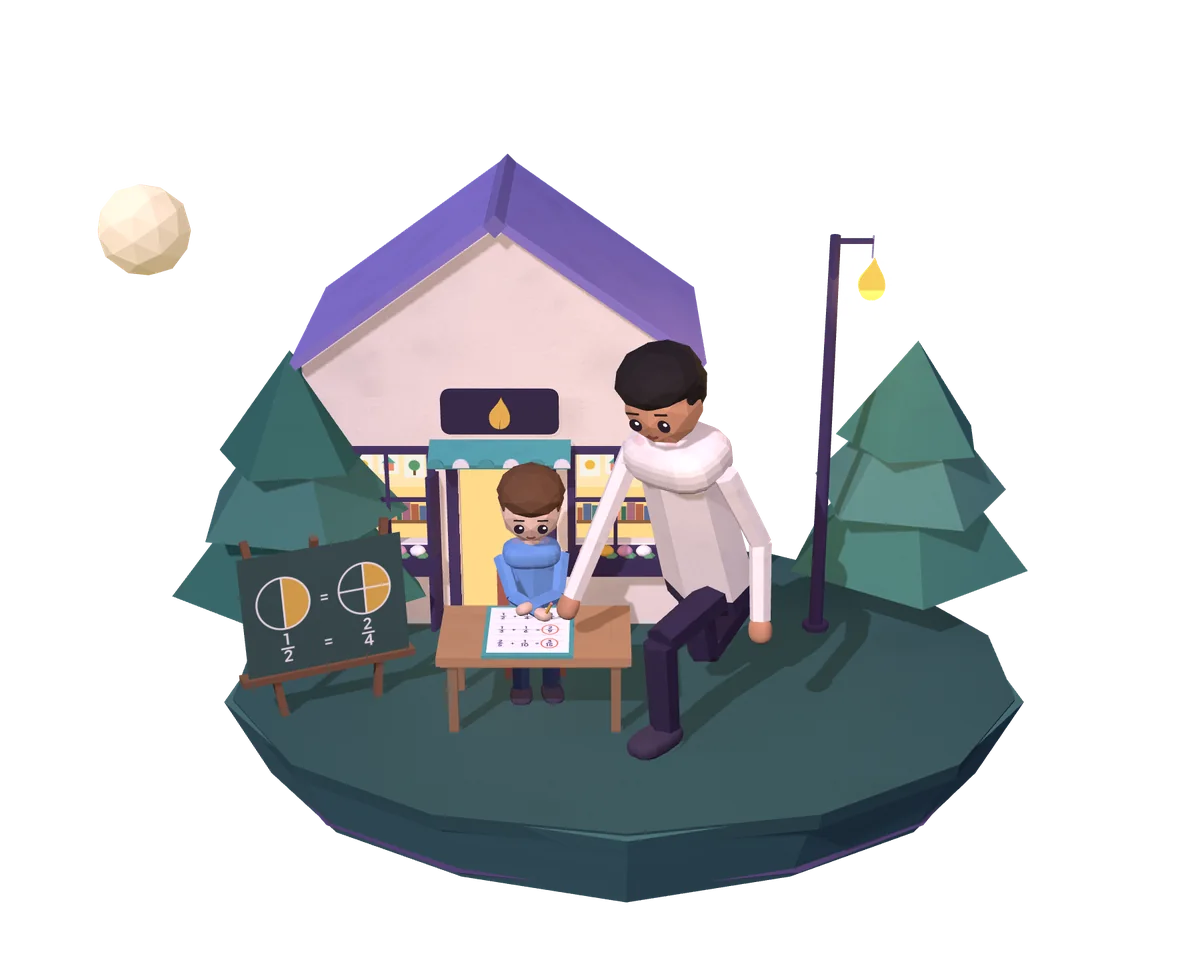

Homework help · Grades 1 to 12
Tonight’s homework, done properly. Then what made it hard, fixed.
Your child does the thinking, with a mentor beside them who never does it for them. When the same kind of question keeps going wrong, the mentor traces it to the skill underneath and fixes that, so homework can get easier over time.
- Grades 1 to 12
- Your child does the thinking
- Mapped to the Ontario curriculum
- Coming soon to Ottawa
Who it’s for
Homework is often where a gap shows first. At the kitchen table.
Evenings parents often describe. One on its own is normal; a few together are worth a closer look.
Homework that ends in tears, or doesn’t end
Work meant to take 20 minutes takes all evening. Often one missing skill is making every question hard.
The same kind of question, wrong every week
A different worksheet, the same mistake. That pattern is the clue we follow back to the root.
“I don’t get it”, and you can’t explain it either
It may be taught differently from how you learned it, or it isn’t your subject. You shouldn’t have to be the expert.
A note home about homework
Unfinished, rushed or not their own work. The note says what; we find out why.
An AI tool that does it for them
The answers are right and little was learned. Homework is practice, and skipping the practice shows on the test.
Homework that has become a nightly argument
Handing the teaching part to a mentor can make evenings at home calmer.
Recognize your child here? A diagnostic assessment is the first step, and it will be free for founding families. See how Hikmah approaches it
How homework help works at Hikmah
Tonight’s homework gets done. And tells us what to fix.
The same six steps as all Hikmah tutoring, with homework as the clue.
The diagnostic
Start with what homework shows
A diagnostic assessment shows where your child really is, and their homework shows what school is asking of them now.
The root
Follow the pattern back
When the same kind of question keeps going wrong, the mentor traces it to the skill underneath, often from an earlier grade.
The plan
A plan with room for what’s due
A written learning plan, mapped to the Ontario curriculum: the root skill first, with room in each session for tonight’s work.
One mentor
A mentor who asks, not answers
Your child does the thinking. The same mentor asks the question that gets them unstuck and never does the work for them, and neither does an AI tool.
Mastery checks
Checked, then checked again
A short mastery check on the root skill, then a revisit weeks later. The next homework on it is the real test.
Updates and the +
A monthly update, and the +
Each month you see what was fixed and one thing to try at home. The + builds what homework can’t: thinking for themselves, real projects and AI as a tool they direct.
A session · Homework help · Kofi, Grade 5
- Tonight’s homeworkKofi works; the mentor asks, never answers.
- The patternWhat the wrong answers share.
- The root skillDecimal place value, shown, then practised.
- Mastery checkShort, and different from tonight’s sheet.
- Explain it backHe teaches one question back, in his own words.
How to help at home
Your part at the kitchen table. What the research suggests.
Practical ways to help, each linked to published research, with what Hikmah will do alongside.
Routines
A routine, and a few clear rules
In a review of research on parents and homework, setting rules for homework was more strongly linked to how children did at school than other kinds of involvement. A set time and place is a simple start.
At Hikmah
- A homework plan your child helps write
- Advice from the mentor when the routine stops working
Elementary
Get guidance on how to help
In 14 studies that trained parents to help with homework, children completed more of it, with fewer homework problems; elementary children possibly did better at school too.
At Hikmah
- One thing to try at home in every progress update
- A mentor to ask when you’re not sure
Grades 1 to 12
Expect it to change as they grow
Homework and achievement were more closely linked in Grades 7 to 12 than from Kindergarten to Grade 6 (a correlation). Our suggestion: keep early homework calm, and hand more over as your child grows.
At Hikmah
- Early grades: reading together and short practice
- High school: a plan your teen runs, with their mentor
Before a test
Quiz, don’t reread
A review of ten common study techniques rated practice testing and spreading study over time as the most useful, and rereading and highlighting among the least. Ask your child questions instead of watching them reread.
At Hikmah
- Practice questions in every session
- Short reviews spread over the weeks before a test
AI tools
Hints, never answers
In a study of nearly 1,000 students at one high school in Turkey, those who practised in class with a standard chatbot did worse on the exam without it than students who never had it. A version built to give hints largely avoided the harm.
At Hikmah
- Your child learns to direct AI: a hint, then their own work
- Homework done by AI doesn’t count as done
All grades
Notice the pattern, and tell us
The same mistake week after week is a clue worth following. In one large study, children’s grasp of fractions and division at 10 to 12 predicted their high school math: a link, not proof of cause.
At Hikmah
- The mentor traces it to the root skill
- Fixed, checked, then checked again weeks later
Research describes averages across many children, and some findings are correlations rather than proof of cause. Each card links to its source.
How it’s different
Finishing the sheet is the start. We follow the wrong answers back.
Getting tonight’s work done matters, and it has its place at Hikmah too. Here is how help that only finishes tonight’s homework compares with a session at Hikmah.
| Homework only | Tutoring+ | |
|---|---|---|
| Tonight’s homework | Done, with help on the hard questions | Done by your child; the mentor asks, never answers |
| A wrong answer | Corrected | A clue, traced to the skill underneath |
| When it keeps happening | Help again, each time | The root skill taught, checked and revisited weeks later |
| Using AI | Not the focus | Taught: hints and checks, after your child has tried |
| You hear | That it’s done | A progress update every month: what was fixed, what’s next |
Illustrative example. Session plans and lengths will be shared with founding families before we open.
What you receive
You’ll know why homework is hard, and what’s being done about it.
Plain words, from the person who sees your child’s homework.
- After the diagnostic
- Where your child really is, and what tonight’s homework rests on, in plain words.
- A written learning plan
- The root skills first, with room for what’s due, mapped to the Ontario curriculum.
- A progress update every month
- What was fixed, what’s next and one thing to try at the kitchen table.
- A mentor to talk to
- Bring the teacher’s note or a sheet that went badly. The same mentor reads it and knows what it means for the plan.
The research behind it
Built on the research. Read with care.
Hikmah hasn’t opened, so we have no results of our own yet. Here is what the research says about homework, parents, mastery and AI.
Homework and achievement
A synthesis of research in the United States since 1987 found generally consistent evidence that homework helps achievement, though every study had design flaws. The link was stronger in Grades 7 to 12 than from Kindergarten to Grade 6.
At Hikmah: In the early grades, homework is mostly a clue to what needs fixing. By high school it’s also real practice, and the plan works around it.
Parents and homework
Training parents to help with homework led to more homework completed and fewer homework problems, and possibly better results for elementary children. In studies of parents’ involvement and how children did at school, setting rules had a stronger link than other kinds of involvement, and the links differed by grade and subject.
At Hikmah: Every progress update ends with one thing to try at home, so your help fits what the mentor is doing.
Mastery
Across 108 controlled evaluations, 91 of them college courses, mastery learning programs improved course-exam scores; on standardized tests the effects were much smaller. Effects appeared stronger for the weaker students in a class, though the difference was not statistically significant.
At Hikmah: When homework shows a gap, the root skill is taught until a mastery check says it’s secure, then checked again weeks later.
AI and practice
In a study of nearly 1,000 students at one high school in Turkey, those who practised in class with a standard chatbot did 48% better during practice, then 17% worse on the exam without it than students who never had it. A version built to give hints, not answers, largely avoided the harm.
At Hikmah: Homework done by AI isn’t practice. Your child does the thinking first, and learns to use AI for hints and checks.
Questions from parents
What parents ask about homework help.
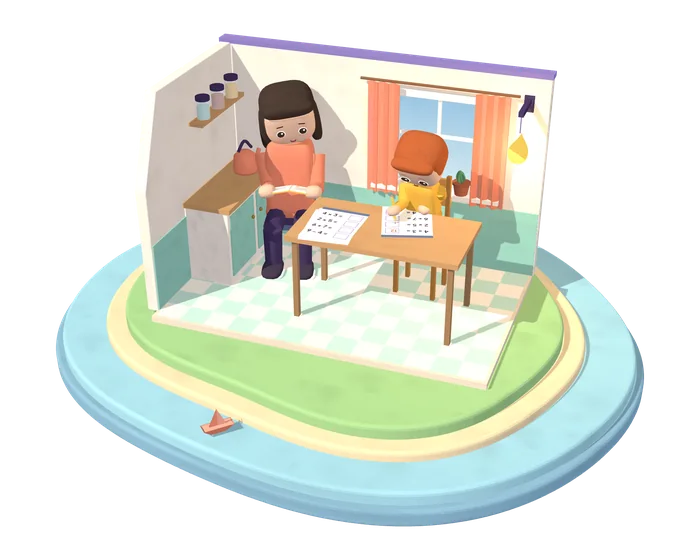
Will you help with tonight’s homework?
Yes. Tonight’s homework gets done properly, with your child doing the thinking. Then the mentor uses it: the questions that went wrong point to the skill that needs work.
Will the mentor just give my child the answers?
No. The mentor asks the question that gets your child unstuck, and your child does the work. Homework someone else did, a person or an AI tool, teaches little.
Can my child use AI for homework?
For hints, and for checking work they’ve already done, yes, and we teach how. For answers, no: in a study of nearly 1,000 students at one high school in Turkey, those who practised in class with a standard chatbot did worse on the exam without it than students who never had it. If your child’s teacher has rules about AI, we follow them.
What if there’s no homework that week?
The session follows the learning plan: the root skill, practice and a mastery check. Homework is a useful clue, not the whole session.
How much should I help at home?
Some, in the right way. A clear routine helps, and every progress update gives you one thing to try. You don’t need to teach the material; that’s the mentor’s job.
Can you help with French immersion homework?
Yes. Sessions will be in English or French. How sessions in French will run will be shared with founding families before we open.
Keep exploring